Company update
The Influence of Celebrities in the Re-Wear Movement
This article by Fashion Takes Action, examines how society tends to criticize celebrities for repeating outfits, but this mindset perpetuates a wasteful fashion culture.
Stories tagged “Fair fashion”.
This article by Fashion Takes Action, examines how society tends to criticize celebrities for repeating outfits, but this mindset perpetuates a wasteful fashion culture.
Mud Jeans significantly reduced its carbon emissions by 42% in 2022, mainly through efficiency improvements with its manufacturing partner, Yousstex, and has maintained carbon neutrality since 2016.
Zürich-based Collateral Good launches a €100M sustainable fashion fund, backed by HUGO BOSS, to drive global innovation and technology investments for a more sustainable textile and fashion industry.
SAC, in partnership with Nike and Target, launched MCAP to accelerate textile manufacturing's carbon reduction, prioritizing Scope 1 and 2 emissions while deferring Scope 3 measurements to encourage broader industry engagement, fostering decarbonization, and promoting transparency.
As only 10-13% of the global cotton supply can be classified as sustainable, it’s imperative that companies understand which standards should be part of a sustainable procurement plan, such as the Better Cotton Initiative, Fair Trade Cotton, and GOTS.
The line, which is integral to the Fiber-to-Fiber Consortium founded by Carbios in 2022, includes prominent European sportswear brands and PVH Corp., the parent company of Calvin Klein and Tommy Hilfiger.
The global economy is shifting to green initiatives and partnerships. Join Innovation Forum’s upcoming conference on Sustainable Apparel and Textiles to discover how brands can adapt practices to deliver on ambitious commitments and growing stakeholder expectations.
Lenzing's expansion of REFIBRA™ technology to LENZING™ ECOVERO™ fibers offers a sustainable solution for reducing textile waste and gaining traction in the fashion industry, with prominent customers like American Eagle Outfitters, Fruit of the Loom, and Farm Rio.
Fashion brands and retailers are at a pivotal point, as a new study signals the risk of irreversible harm to livelihoods, environments, and future production unless significant improvements are made in their relationship with cotton supply chains.
Younger consumers, driven by heightened environmental and social awareness, demand transparency from brands, posing a significant challenge for industries like retail and fashion to substantiate sustainability claims and avoid greenwashing tactics.
A report by Clarity AI reveals that 20% of sustainability-labeled investment funds classified as Article 8 would meet the criteria of proposed fund labeling rules aimed at reducing greenwashing risk.
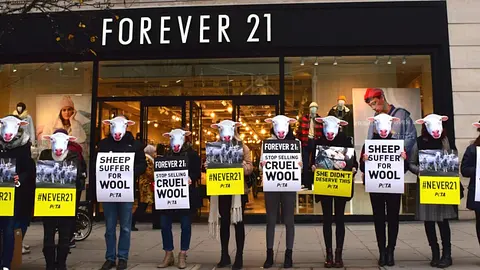
PETA has accused Forever 21 mislabeling real feather products as faux, urging corrective action in a sternly worded letter to CEO Winnie Park.
Canada's corporate watchdog Meyerhoffer is investigating Guess over potential ties to Uyghur forced labor in China, citing concerns about the company's insufficient proof of having no supply links to Chinese firms using forced labor.
Apparel brand Lululemon has partnered with Samsara Eco to scale up textile-to-textile recycling and create infinitely recyclable nylon and polyester from apparel waste.
The EU Council has adopted its position on the proposed ecodesign regulation, aiming to establish comprehensive sustainability requirements for European products and promote the green transition.
Uniqlo partners with FIT to launch the Re.Live collection, an innovative upcycling initiative featuring 11 pieces, born from the Re.Uniqlo program that transforms non-sellable and non-wearable Uniqlo products.
The Water Resilience Coalition (WRC) is launching the Women + Water Collaborative to improve water and sanitation access in India with the collaboration of Gap Inc., Cargill, GSK, WaterAid, and the WRC, targeting the Krishna and Godavari basins in a cross-sector effort to address water issues.
Twelve leading fashion brands including Under Armour have collaborated on a historic collective virtual power purchase agreement (CVPPA) with Lightsource BP, aiming to advance their renewable energy goals and reduce their carbon emissions.
In this article, The Fashion Network explains the transformation of the fashion industry by enabling virtual marketing campaigns and fashion shows, virtual fitting rooms, improving the second-hand market, and integrating AI into rental fashion.
H&M's Green Bond, worth €500 million and part of their sustainable finance efforts, has garnered strong global investor interest, signaling a broader shift towards sustainable finance in the fashion industry.